Meerut Murder Case: Wife and Lover Sentenced to Death
 Post-mortem Report Exposes Murder Plot | Court Orders Measures for the Welfare of Three Minor Children
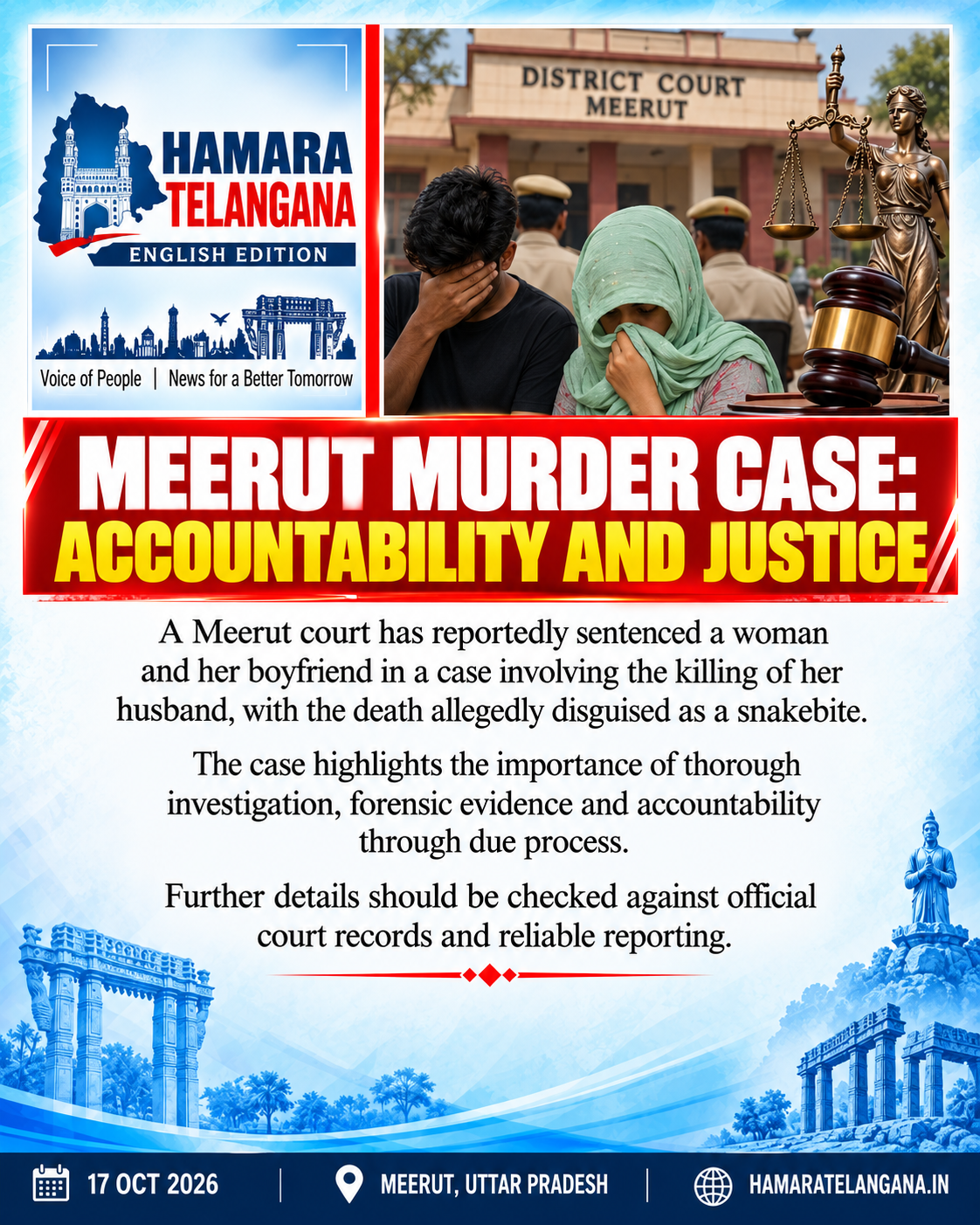
MEERUT, UTTAR PRADESH, October 17: In a significant development in the Meerut murder case, a court has sentenced Ravita Kashyap and her alleged lover, Amardeep, to death for the murder of her husband, Amit Kashyap, also known as Mikky. The verdict was pronounced on October 16, 2026, following their conviction in a case that prosecutors said involved an attempt to disguise the murder as a snakebite death.
According to media reports, the court considered the circumstances of the crime while deciding the sentence. The case drew attention because the initial suspicion of a snakebite reportedly gave way to a murder investigation after medical findings raised doubts about the cause of death.
Suspicion Surrounding the Death
Amit Kashyap died at his home in Akbarpur Sadat village in Meerut district in April 2025. Reports state that a snake was found near his body, leading to an initial suspicion that he had died from a snakebite.
However, a post-mortem examination reportedly found that Amit had died from asphyxia caused by strangulation. The medical findings prompted investigators to examine the circumstances of his death as a suspected homicide.
Prosecution Allegations
According to prosecution accounts reported by the media, Ravita and Amardeep were alleged to have planned Amit's murder. Investigators reportedly examined their relationship, communications and other evidence while reconstructing the events leading to his death.
The prosecution alleged that a snake was obtained and placed near Amit's body to make the death appear accidental. These allegations formed part of the case presented before the court.
Forensic Evidence Played a Key Role
The post-mortem report, witness testimony and mobile phone records were among the pieces of evidence reportedly considered during the investigation and trial. Media reports also stated that the prosecution presented 12 witnesses.
The court reportedly convicted the two accused on October 7, 2026, and pronounced the death sentence on October 16. The precise findings and reasoning should be read alongside the official judgment.
Court Directs Attention to the Children's Welfare
The case also raised concerns about the future of Amit's three minor children. According to Hindustan Times, the court directed the Meerut District Magistrate to ensure that the children receive support for necessities such as food, education and shelter.
The direction highlights the wider impact of serious crimes on children and other family members who may be left vulnerable after the loss of a parent.
What Happens Next?
Media reports indicate that the defence intends to challenge the verdict. A death sentence does not mean immediate execution. Under India's legal system, a death sentence is subject to confirmation by the High Court and the applicable legal procedures.
Hamara Telangana's Perspective
The Meerut case highlights the importance of forensic science, medical examination and evidence-based investigation in resolving suspicious deaths. The reported findings demonstrate why investigators must carefully examine all available evidence rather than rely solely on the initial appearance of a death.
At the same time, responsible reporting requires a clear distinction between prosecution allegations, evidence presented in court and findings formally established by the judgment. The next stage of the case will depend on the applicable legal process and any appeal proceedings.
Hamara Telangana | Telangana News and Beyond
Editorial note: Verify the judgment and sentencing details against official court records before publication.
All Rights Reserved By Hamara Telangana.
 Print
Print
 Save
Save